
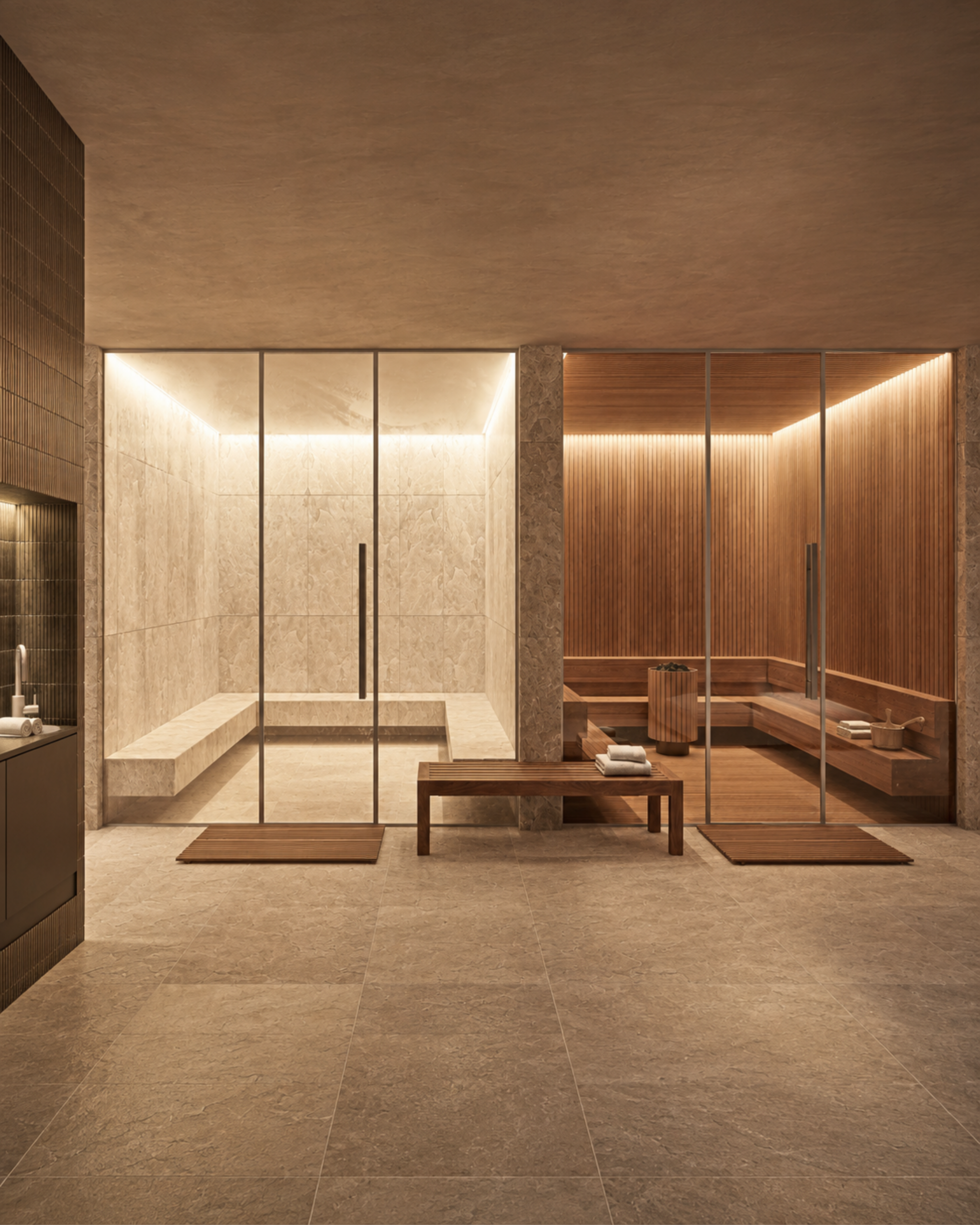
In high-performance sauna environments, material selection is not a design afterthought; it is a critical determinant of safety, durability, and user comfort. Unlike conventional interiors, saunas operate under extreme thermal stress, with sustained heat, humidity fluctuations, and continuous expansion and contraction cycles. This makes the choice of materials a strategic decision that directly impacts long-term performance and user experience.
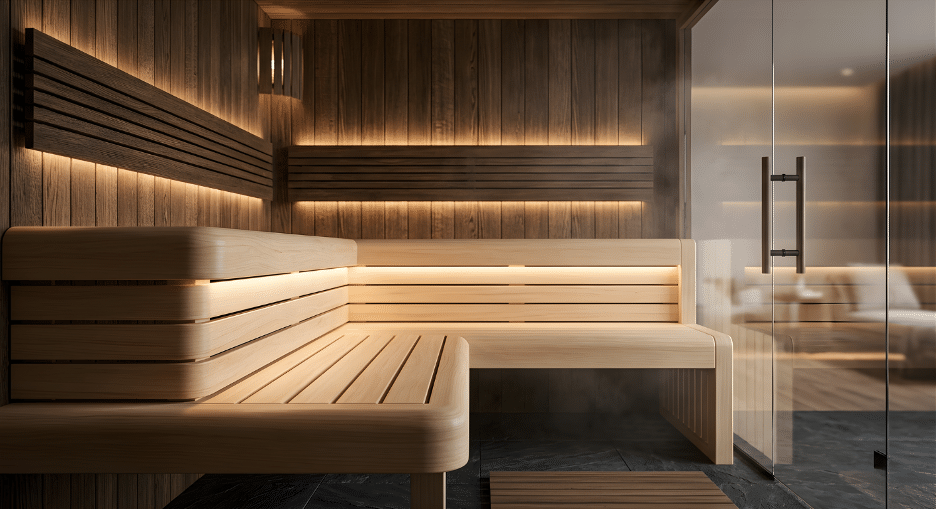
A well-designed sauna integrates materials that remain stable, breathable, and safe under these demanding conditions. Woods such as cedar, hemlock, and thermo-treated variants are widely specified for their low thermal conductivity, resistance to moisture, and structural integrity. These materials do not overheat on contact, resist warping over time, and maintain their form even under repeated thermal cycling. Equally important is their ability to perform without releasing harmful emissions, ensuring a clean and healthy environment.
Functionality varies across different surfaces, requiring a nuanced approach to material selection. Bench areas demand low-resin, smooth, and cool-to-touch woods to ensure comfort during prolonged use, while walls and ceilings prioritize dimensional stability and resistance to humidity. Complementary materials such as tempered glass and corrosion-resistant metals further enhance durability while supporting modern design aesthetics.
Conversely, inappropriate material choices can compromise both safety and longevity. Engineered woods, chemically treated timber, and high-resin softwoods often degrade under heat, leading to structural instability, unpleasant odors, or even harmful emissions. Over time, these materials fail not only visually but functionally, increasing maintenance costs and reducing the lifespan of the installation.
Beyond performance, materiality also shapes the sensory identity of the sauna. The texture of the wood, the way it responds to heat, and its visual warmth all contribute to the overall atmosphere. A carefully curated palette creates an environment that feels intuitive, comfortable, and refined without relying on excessive design elements.
From a commercial standpoint, investing in the right materials translates into long-term value. Reduced maintenance, extended lifespan, and consistent user satisfaction all contribute to stronger returns, particularly in hospitality and wellness environments where reliability is essential.
At WSSC, material selection is approached with both technical precision and design sensitivity. Each component is evaluated not only for its aesthetic contribution but for its ability to perform under pressure, ensuring every sauna we deliver is built for longevity, safety, and an elevated user experience.