
In today’s evolving wellness landscape, thermal environments are expected to do more than function, they must communicate. The most refined spa spaces no longer rely on signage or instruction; instead, they naturally guide users through carefully orchestrated sensory and spatial cues. This approach transforms passive environments into immersive journeys where movement, pause, and transition feel instinctive rather than directed.
Designing such spaces requires a shift from visual dominance to experiential intelligence. Layout planning becomes a narrative tool, where sequences of heat, humidity, and cooling are arranged in a natural progression. Clear sightlines subtly reveal the next step, while spatial hierarchy establishes rhythm, allowing guests to move from high intensity zones into quieter areas without hesitation or confusion.
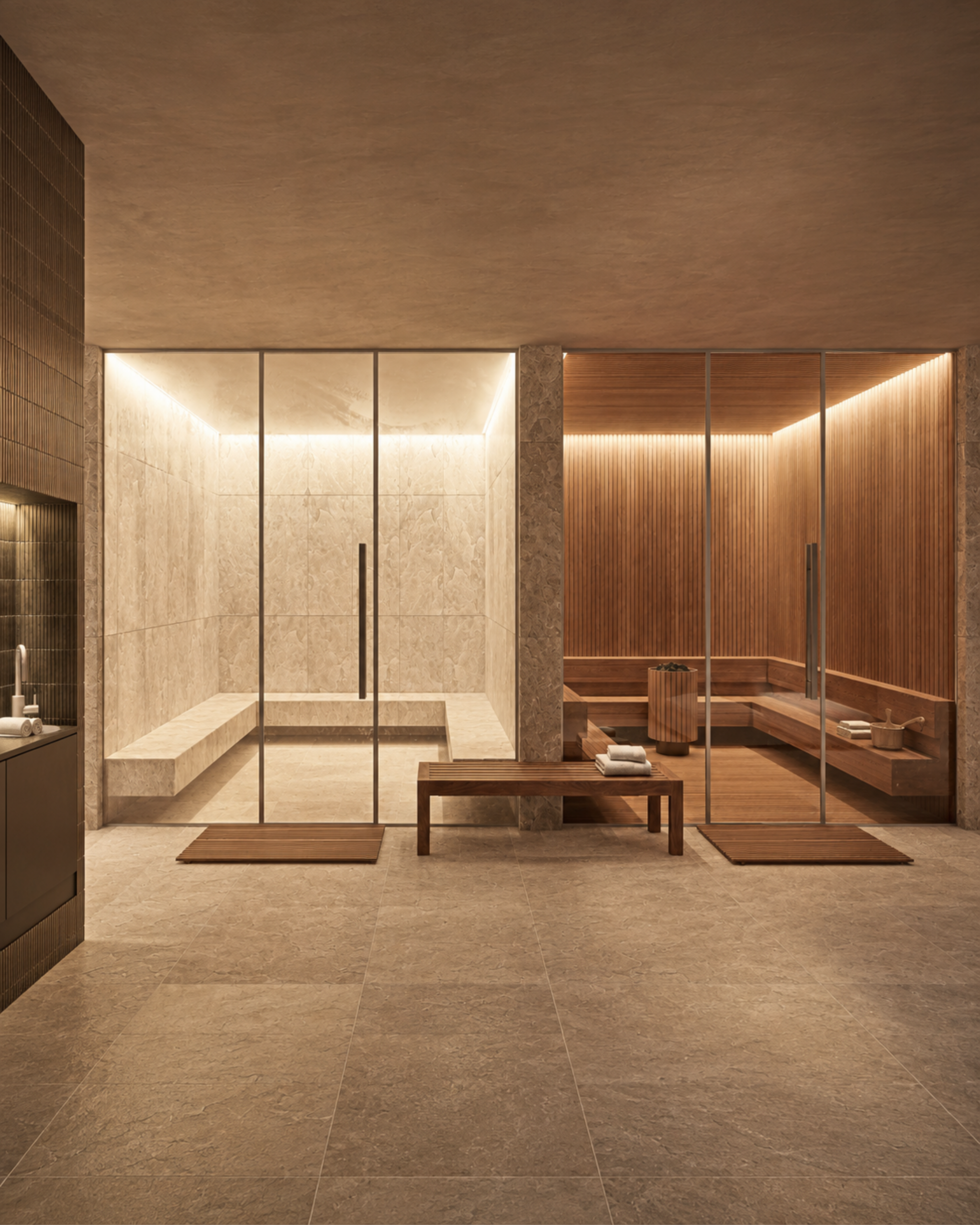
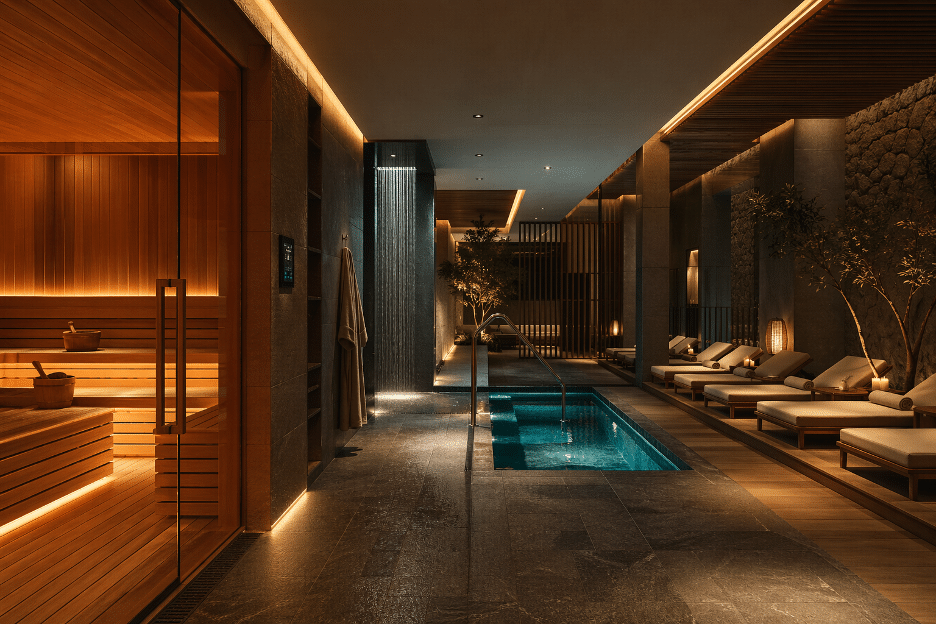
Materiality plays a critical role in this silent guidance. Warm timber invites stillness and prolonged use, while cooler stone surfaces encourage transition and circulation. Variations in texture underfoot signal change without disruption, guiding movement through touch alone. Similarly, lighting becomes directional rather than decorative, with warmer tones drawing users into heat experiences and softer, diffused illumination indicating spaces for rest and recovery.
Airflow and temperature gradients further reinforce this intuitive navigation. Slight shifts in warmth, humidity, and air movement create a natural pull, encouraging users toward comfort without conscious decision making. The result is a seamless flow where the body responds before the mind processes, enhancing both ease and engagement.
In practice, this design philosophy is particularly effective within thermal circuits. The positioning of saunas, steam rooms, cold plunges, and relaxation zones must feel interconnected yet distinct. Transitional spaces act as buffers, allowing physiological adjustment while maintaining continuity. When executed correctly, the environment itself becomes the guide, reducing reliance on staff intervention and improving operational efficiency.
From a commercial perspective, intuitive thermal design elevates both user satisfaction and spatial performance. Guests are more likely to engage fully with the facility, extending their stay and increasing perceived value. For operators, this translates into stronger retention, clearer flow management, and a more refined brand experience.
At WSSC, we approach thermal design as both a science and an art, combining spatial planning, environmental control, and sensory detailing to create environments that communicate effortlessly. Our consultancy expertise ensures that each project delivers not only aesthetic distinction but also intuitive functionality.
Ultimately, the most successful thermal spaces are those that require no explanation. They are felt, understood, and experienced instinctively, leaving a lasting impression defined by ease, clarity, and quiet sophistication.