
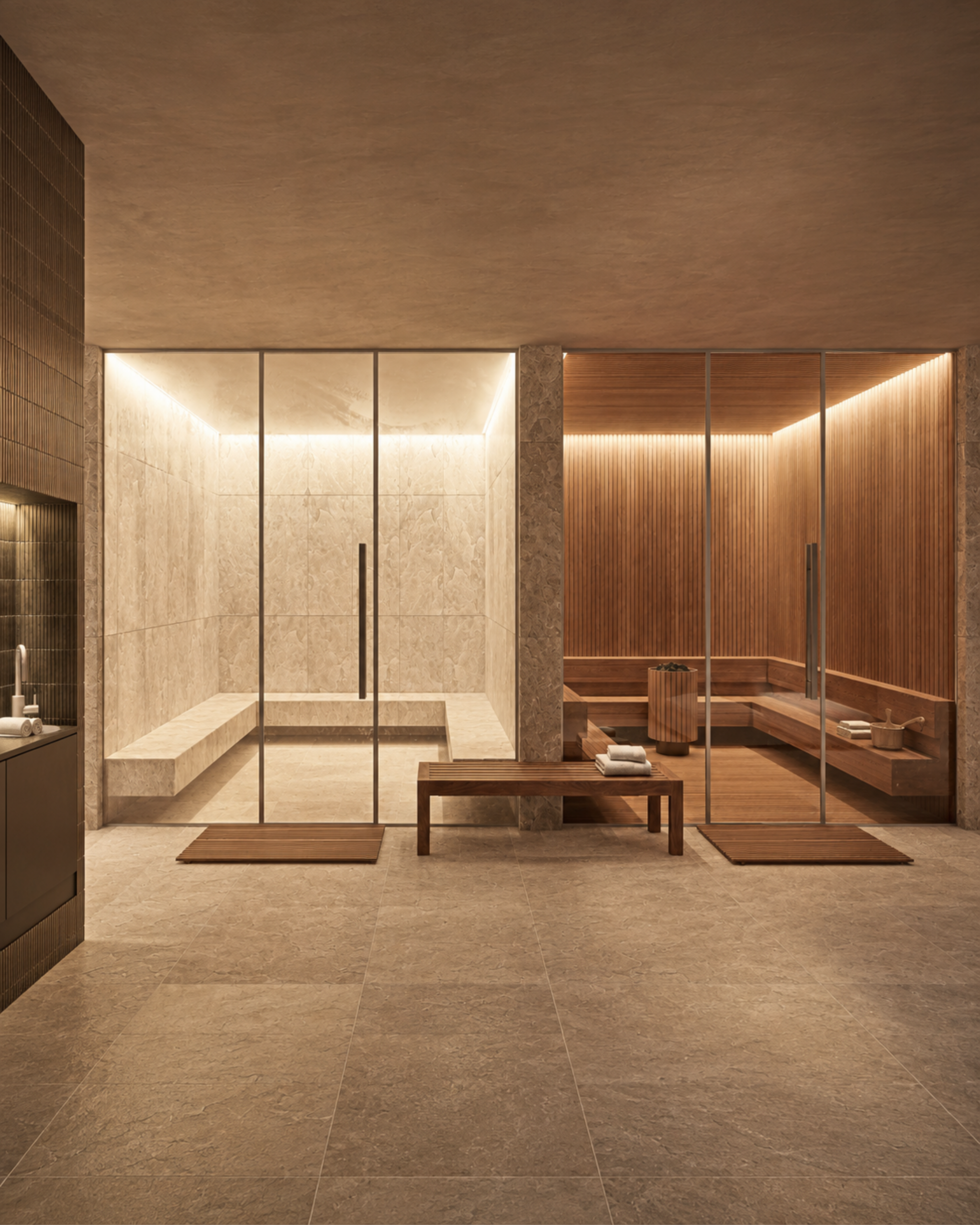
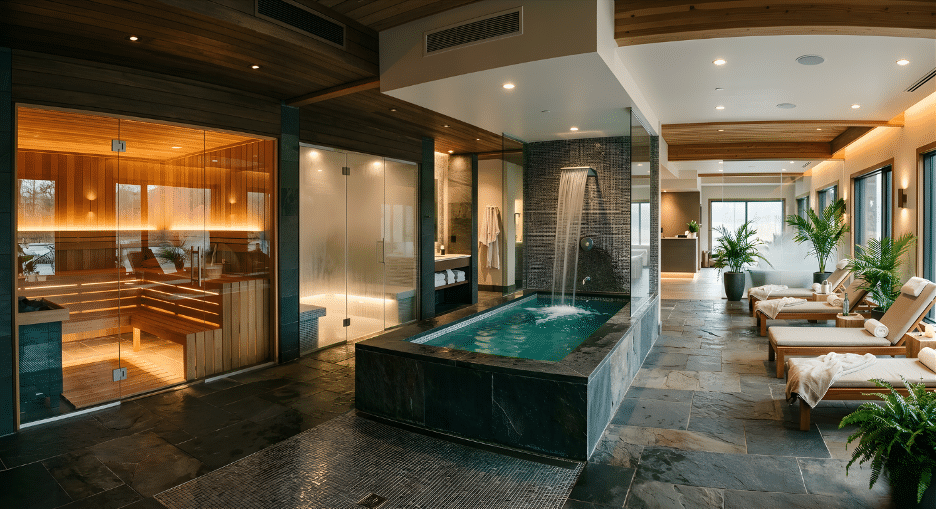
In modern spa environments, the guest experience is no longer defined by individual facilities, but by how seamlessly different climatic conditions are orchestrated within a single space. A well designed spa operates as a controlled ecosystem, where variations in heat, humidity, and air movement are intentionally layered to guide the body through a sequence of therapeutic states.
Rather than treating sauna, steam, and relaxation areas as isolated features, advanced spa design considers how each microclimate interacts within the overall spatial composition. High temperature dry zones stimulate circulation and detoxification, while moisture rich environments intensify heat perception and promote respiratory benefits. Cooler areas, including plunge pools and recovery lounges, introduce contrast that supports muscle recovery and nervous system regulation. The value lies not in the individual spaces, but in the continuity between them.
Achieving this level of integration requires a highly calibrated technical approach. Environmental systems must operate with precision to ensure that heat and humidity remain contained within their designated zones. Airflow is strategically directed to extract excess moisture from wet areas while preserving comfort in adjacent spaces. At the same time, material selection becomes a functional decision, where stone, wood, and composite finishes are chosen based on their thermal behaviour and resistance to prolonged exposure.
One of the most critical yet often overlooked aspects is the management of transitions. Moving between contrasting environments should feel gradual and natural, allowing the body to adapt without discomfort. This is achieved through buffer spaces that subtly moderate temperature and humidity, supported by thoughtful spatial planning and controlled ventilation. These transition zones enhance the overall journey, transforming movement through the spa into a guided experience rather than a series of abrupt changes.
In practical terms, this approach allows developers to create multi layered wellness environments within a compact footprint. Whether in hospitality settings or high end residential developments, microclimate planning enables a diverse range of experiences while maintaining operational efficiency and design cohesion.
From a commercial perspective, spas that successfully integrate microclimates offer a more engaging and memorable user experience, leading to increased usage and stronger differentiation in the market. They also demonstrate greater durability, as properly balanced environments reduce long term wear and technical failures.
At WSSC, as a dedicated spa and wellness consultancy, we specialise in designing and coordinating these complex environmental systems, ensuring each microclimate functions independently while contributing to a unified and immersive wellness journey.